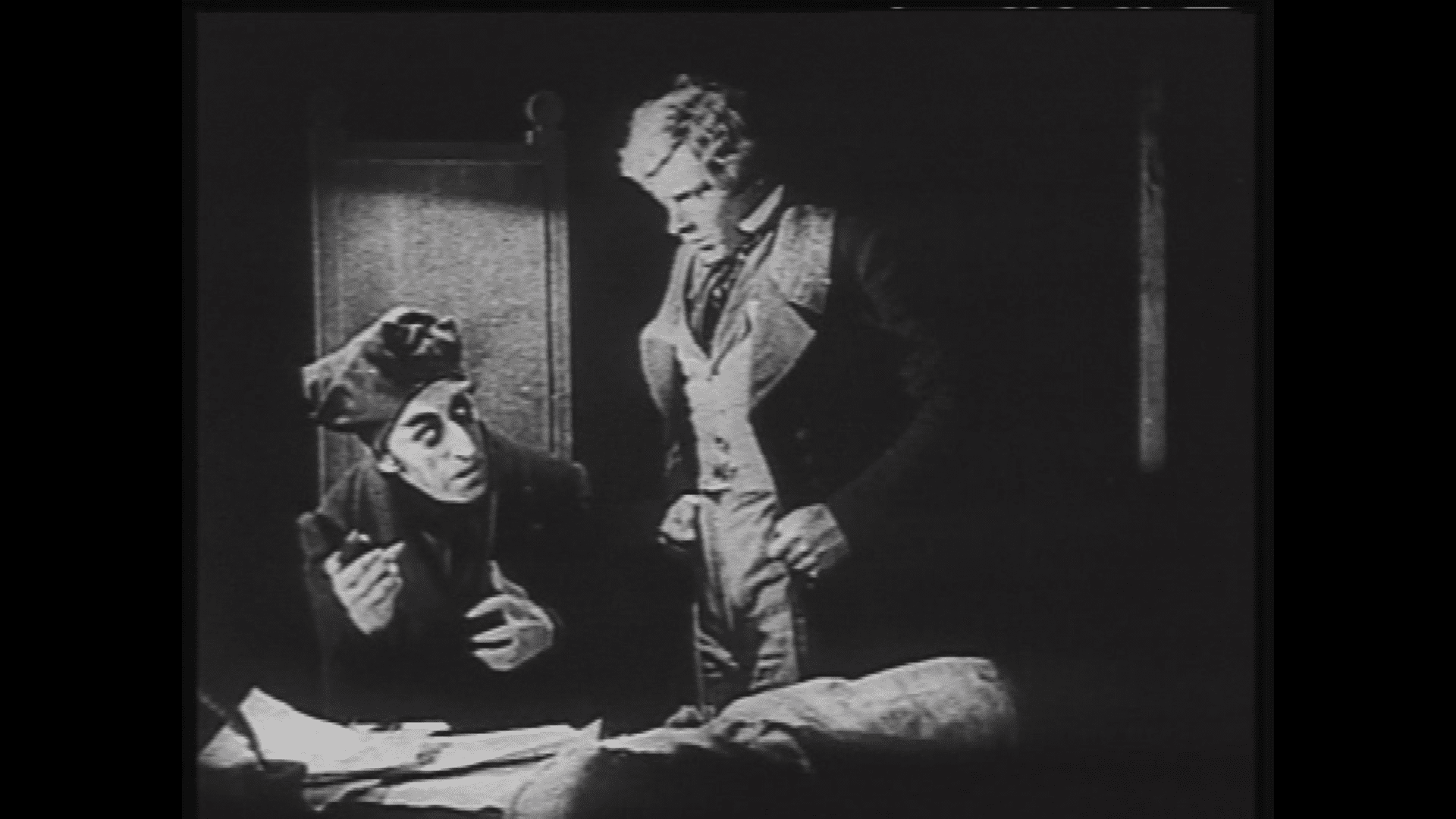
The first time I saw Nosferatu was Halloween of 2009, when my brothers and I all got the swine flu and couldn't go trick-or-treating. My dad went to the old family video and rented some old-timey spooky movies for us to watch. It was certainly an interesting time to watch a movie about the plague harbinger, and I guess it is again. Viewing it now, I'm more spooked by Count Orlok than I was back then. Those sunken eyes with the tiny pupils give me the heeby-jeebies, like I'm being watched. Back then, I thought Count Orlok's complete lack of subtlety as far as being a vampire was hilarious. I always thought the way he talks about blood, moves around creepily with predatory intent, etc., was so funny to me because I have the context of vampires in pop-culture that didn't really exist in 1922. The Benshoff reading caused me to rethink this a bit. The obviousness of Count Orlok's nature no longer seems like just a result of modern vampire-saturated media, but reflective of fears of heterosexual men that are described in "The monster and the homosexual". Benshoff mentions the monster as representatives of the man's lusts. We have this happy heterosexual couple, where the man, Hutter, encounters this suspicious but lucrative job opportunity. He's tempted to pursue it despite rumors about the employer, separated from his wife, and ultimately trapped by this perverse creepy dude, Count Orlok. Orlok's comment's about blood come across as innuendo, and the aggressive movements toward Hutter mirror the fear of heterosexual men being predators to innocent young men. This is the first time I'm thinking about these themes in this film, although I'm not exactly surprised since, as a friend once put it, "vampires are gay and always have been".


I most certainly agree with the "Vampires have always been gay" sentiment, and this is particularly interesting in relation to how Vampires have shifted in form and style over the years. Orlok keeps to the shadows and relies on others to do his dirty work for him, entering places he shouldn't and seemingly doing everything he can to stop his presence from being detected. This mirrors the perceptions of homosexuality that likely existed in Germany at the time: a threat to traditional values which was rarely ever perceived or interacted with, a phantom revealed primarily through stories and legends. Even at the end of the film, very few people are aware of Orlok's presence in the city, this lack of awareness and curiosity perhaps emerging as part of the ultimate triumph over evil.
ReplyDeleteHey Sarabeth! I am totally with you regarding Thomas's inclination to pursue a lucrative job opportunity in spite of the rumors and suspicions surrounding the Count and how perhaps Orlock and Thomas can both be seen in lustful in this way. I am curious about your perspective on the film creator F.W. Murnau being homosexual in relationship to that creepy feeling you got when seeing the Count for the first time. Do you think perhaps this is a projection of some kind of self loathing/the monstrous interior?
ReplyDeleteHi SB!! I totally didn't even think of that while watching Nosferatu-- the count as the physical embodiment of plague-- but it is quite morbidly amusing to be watching it in quarantine. That really brings a whole new element of fear to the story that I hadn't really thought of before. Like, I can't relate to a small town being scared of this one spooky count because I live in the city and don't ever really leave my house, but I definitely can empathize with a community terrified to go outside because there is a mysterious 'disease' spreading.... There are many parts of this film that are dated but unadulterated fear is timeless, I guess....
ReplyDeleteI love the seductive creepiness of Count Orlock and while it is easy to talk about his repulsive aspects I think it is also interesting to think of homosexuality as the monster that we all sort of desire to experience. I said once in class that I find Max Shrek's Count Orlock to be way sexier than Robert Pattinson's Edward Cullen from the Twilight series but everyone just acted like I was nuts. I do think it is interesting to explore the continuing appeal of vampires as these figures of perverse but yet still deeply seductive unholiness.
ReplyDelete